


Ransomware is not just a payload. It is a supply chain.
Phishing pages, malware delivery, command-and-control systems, extortion sites, and criminal marketplaces all need infrastructure that remains reachable while victims and authorities try to remove it. A federal indictment unsealed on July 14 puts that service layer at the center of the alleged operation.
U.S. prosecutors accuse three Russian nationals and two companies, Media Land LLC and ML.Cloud LLC, of providing bulletproof hosting to criminal customers. The 75-page indictment alleges that their infrastructure supported ransomware, malware, fraud, phishing, brute-force attacks, and other illicit activity.
The case treats resilient hosting as part of the alleged criminal machinery—not merely the place where that machinery happened to run.
The indictment contains allegations. All defendants are presumed innocent unless and until proven guilty beyond a reasonable doubt.
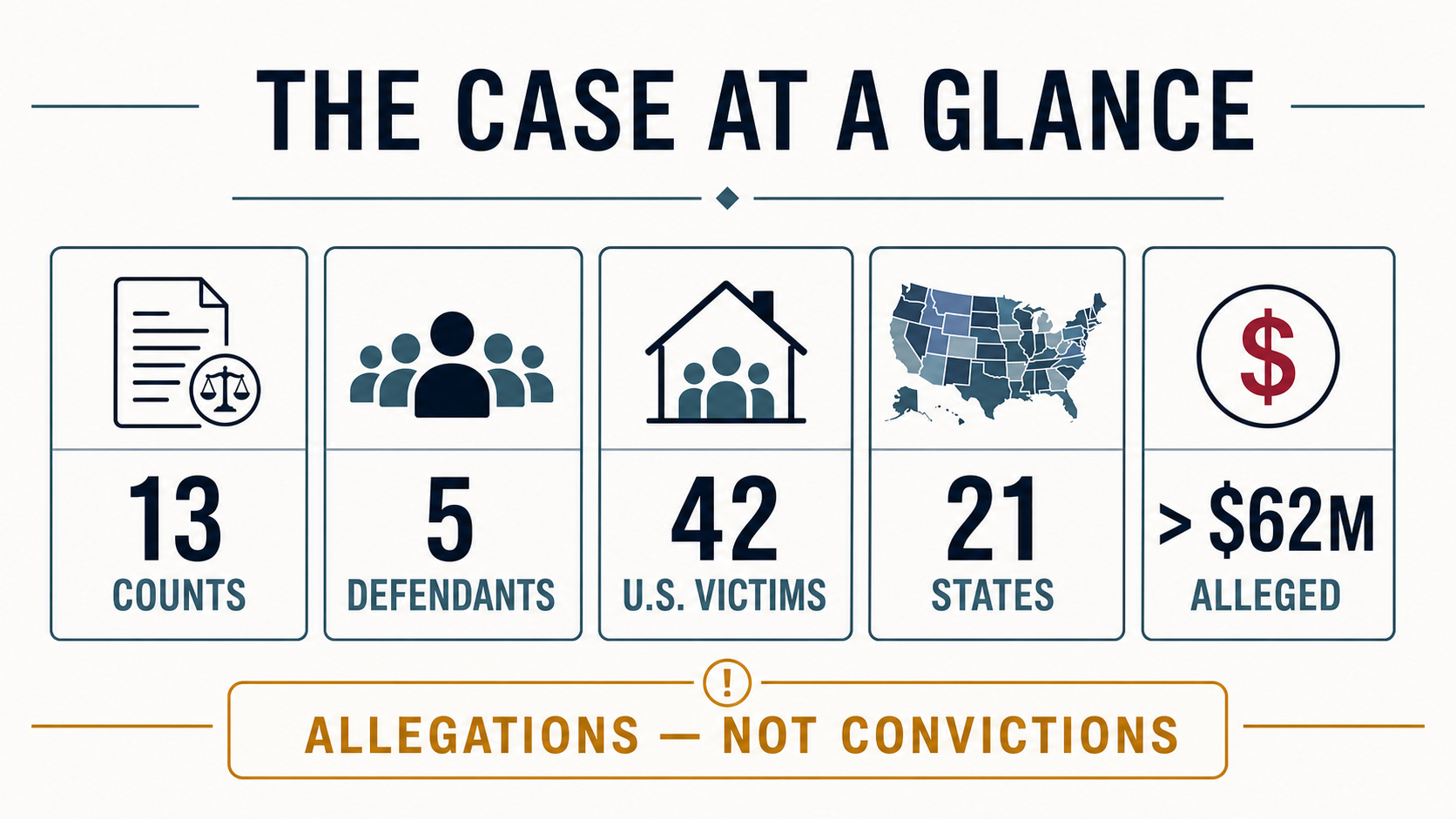
The public filings describe 13 counts against five defendants and more than $62 million allegedly collected from 44 numbered victims, including 42 U.S. organizations across 21 states.
The Service Layer Enters the Case
The indictment was returned in December 2024 and unsealed this week. It contains 13 counts: one count of conspiracy to commit computer fraud, one count of conspiracy to commit wire fraud, ten substantive wire-fraud counts, and one count of conspiracy to commit money laundering.
Prosecutors allege more than $62 million was collected from 44 numbered victims. The Justice Department says 42 of those victims were U.S. organizations across 21 states; the indictment also lists victims in Canada and the United Kingdom.
Those organizations span banks, schools, government bodies, healthcare providers, media companies, and other businesses. The filing does not say every attack became a successful breach, and the criminal counts are not convictions. They are a map of what prosecutors say the service enabled and how they intend to prove it.
That distinction matters because infrastructure can sit below many campaigns at once. A phishing domain may disappear. A ransomware brand may rebrand. A hosting relationship, payment trail, or administrator identity can connect activity that otherwise looks fragmented.
“Bulletproof” Is a Service Promise
Ordinary hosting providers respond to abuse complaints and lawful requests. Bulletproof hosting is marketed around resistance: keep systems online despite the malware, fraud, or extortion they support.
According to the indictment, the defendants offered infrastructure in China, Finland, the Netherlands, and the United States, not only in Russia. Prosecutors say criminal customers used those servers for malicious websites, command-and-control traffic, phishing, malware distribution, and extortion operations.
The allegation is therefore not simply that criminals rented servers. It is that the service was designed and operated to preserve abusive activity under pressure. Resilience itself becomes the product being examined.
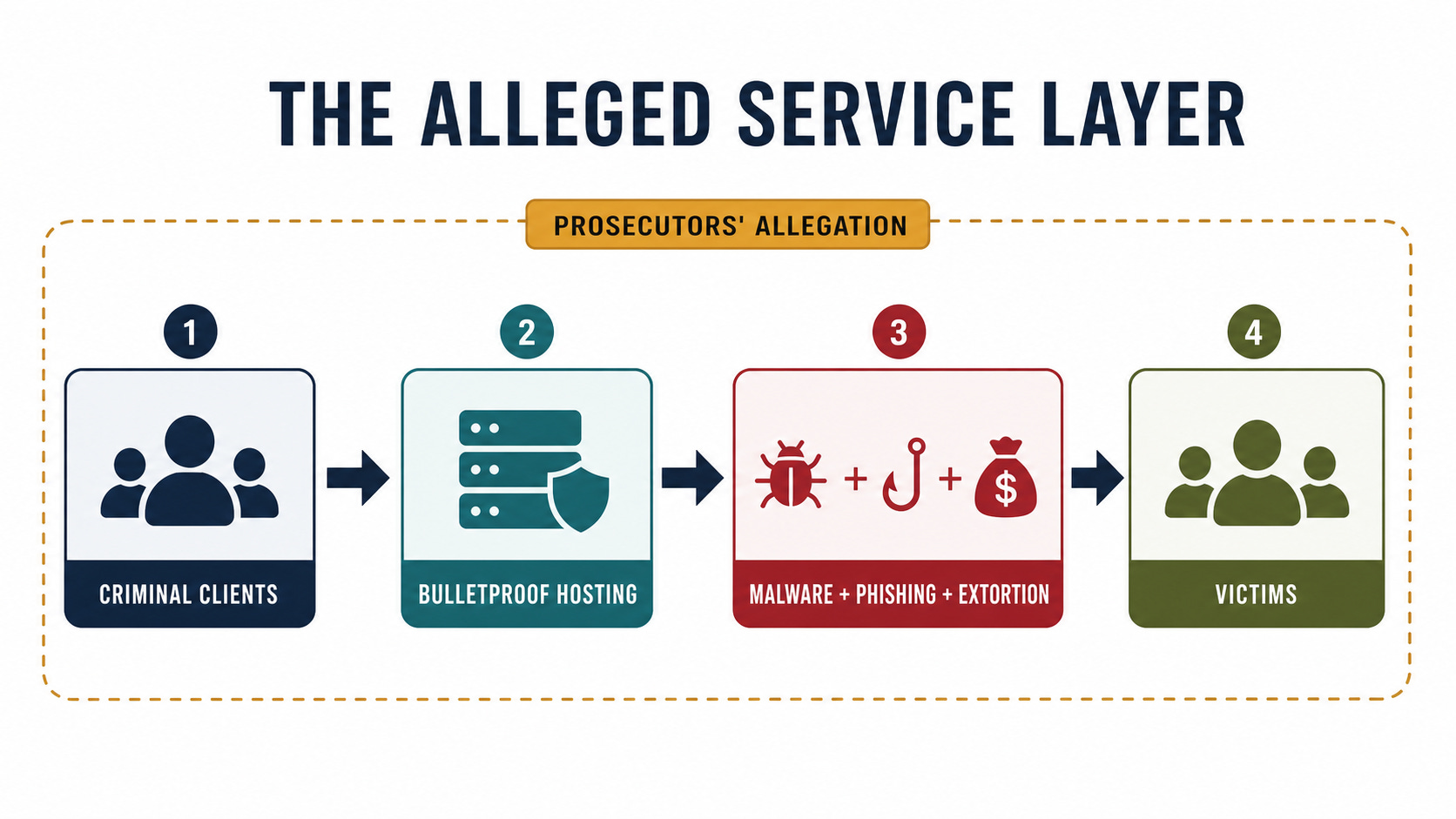
Prosecutors allege that criminal customers used resistant hosting to sustain malware, phishing, extortion, and related activity. The diagram represents the allegation, not a finding of guilt.
Pressure Arrived in Layers
This week's unsealing is one step in a longer sequence.
The grand jury returned the indictment in December 2024. In November 2025, the Treasury Department sanctioned Media Land and related actors. Treasury said Media Land had supported ransomware groups including LockBit, BlackSuit, and Play; that attribution belongs to the sanctions action and should not be treated as proof of the criminal charges.
Now the indictment is public, and the State Department's Rewards for Justice program is offering a reward of up to $10 million for qualifying information about foreign government-linked associates of the alleged operators, their malicious cyber activity, or foreign government-linked use of the two companies. The reward is conditional on the information and program rules; it is not a guaranteed payment.
No arrest, extradition, plea, conviction, service seizure, shutdown, or infrastructure takedown was announced with the unsealing. Legal pressure is not the same as proven operational disruption. Customers may migrate, administrators may change identities, and systems may move before any visible break in service.
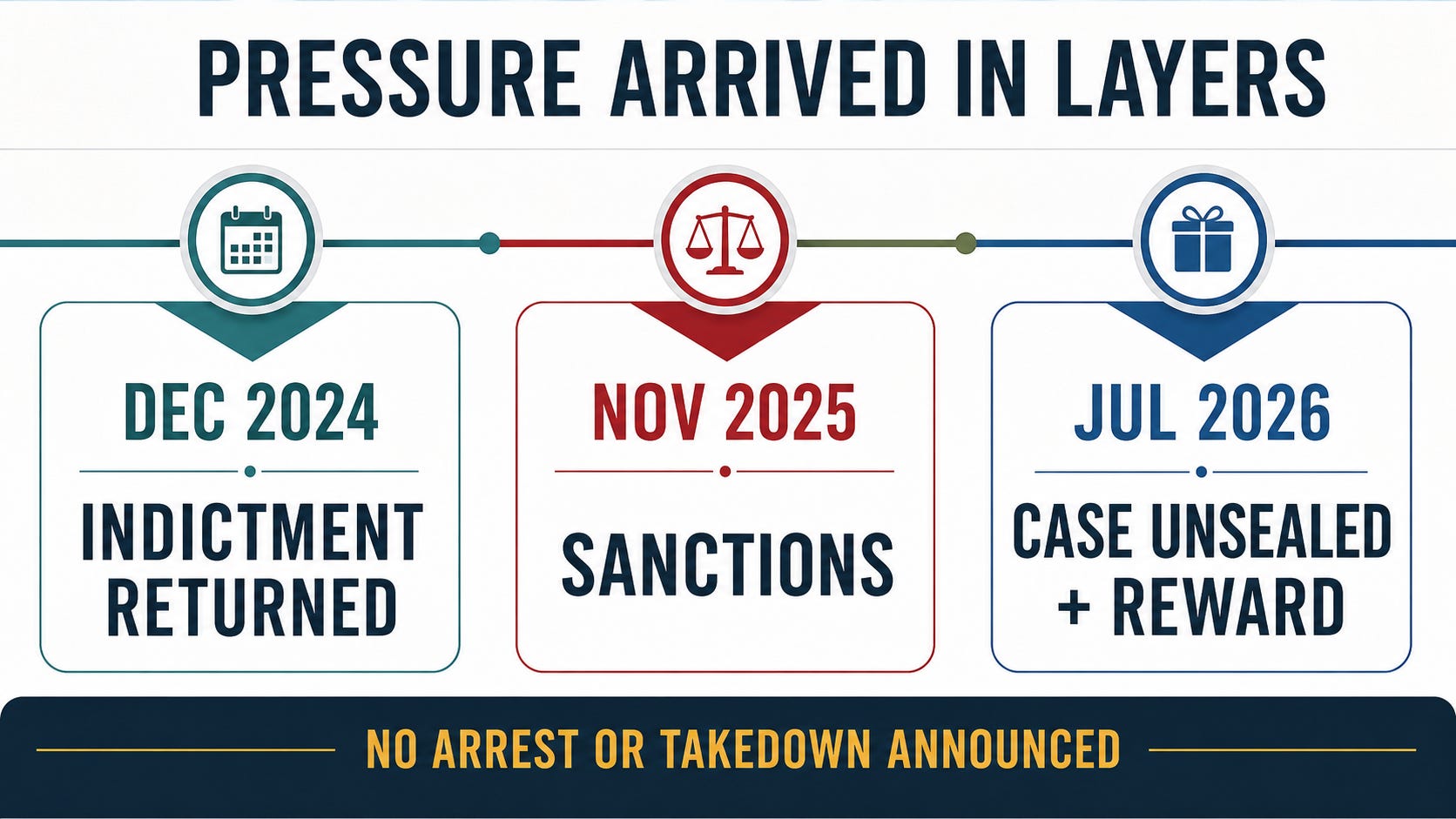
The public sequence runs from a December 2024 indictment to November 2025 sanctions and a July 2026 unsealing and reward announcement. Authorities did not announce an arrest or takedown.
Shared Infrastructure Creates a Shared Choke Point
Ransomware investigations often begin with the visible layer: a note, a leak site, a malware family, or an intrusion at one victim. The infrastructure layer can reveal a wider dependency.
Multiple criminal crews can use the same hosting operator, control panel, reseller, autonomous system, registrar relationship, or payment channel. Those shared services create concentration. They also create evidence: recurring network ranges, administrative accounts, billing records, abuse correspondence, and migration patterns can persist across campaigns.
That does not make every system on a network malicious, and it does not make an infrastructure overlap sufficient for attribution. Providers can host mixed populations, and IP addresses can be reassigned. The useful unit is a corroborated pattern: technical observations joined with time, ownership, account, and legal evidence.
This is where infrastructure analysis earns its place beside malware analysis. Payload signatures describe one tool. Service dependencies can expose how several operations stay available.
Turn the Case Into a Control Test
Security teams do not need to wait for a seizure banner to use the public record. The case supports five practical checks:
Map external-facing systems, domains, hosting providers, registrars, and autonomous systems so a change in infrastructure is visible.
Hunt across DNS, proxy, firewall, endpoint, and identity telemetry for corroborated relationships—not a single shared IP.
Validate blocklists and attribution before enforcement, especially when infrastructure may be shared or rapidly reassigned.
Preserve DNS resolutions, connection metadata, abuse reports, account records, and relevant flow logs before routine retention removes them.
Reassess detections after indictments, sanctions, or disruptions because operators often migrate and defenders can mistake movement for disappearance.
These steps are defensive and evidence-led. They reduce two opposite errors: ignoring the service layer entirely and overreacting to one unverified infrastructure indicator.
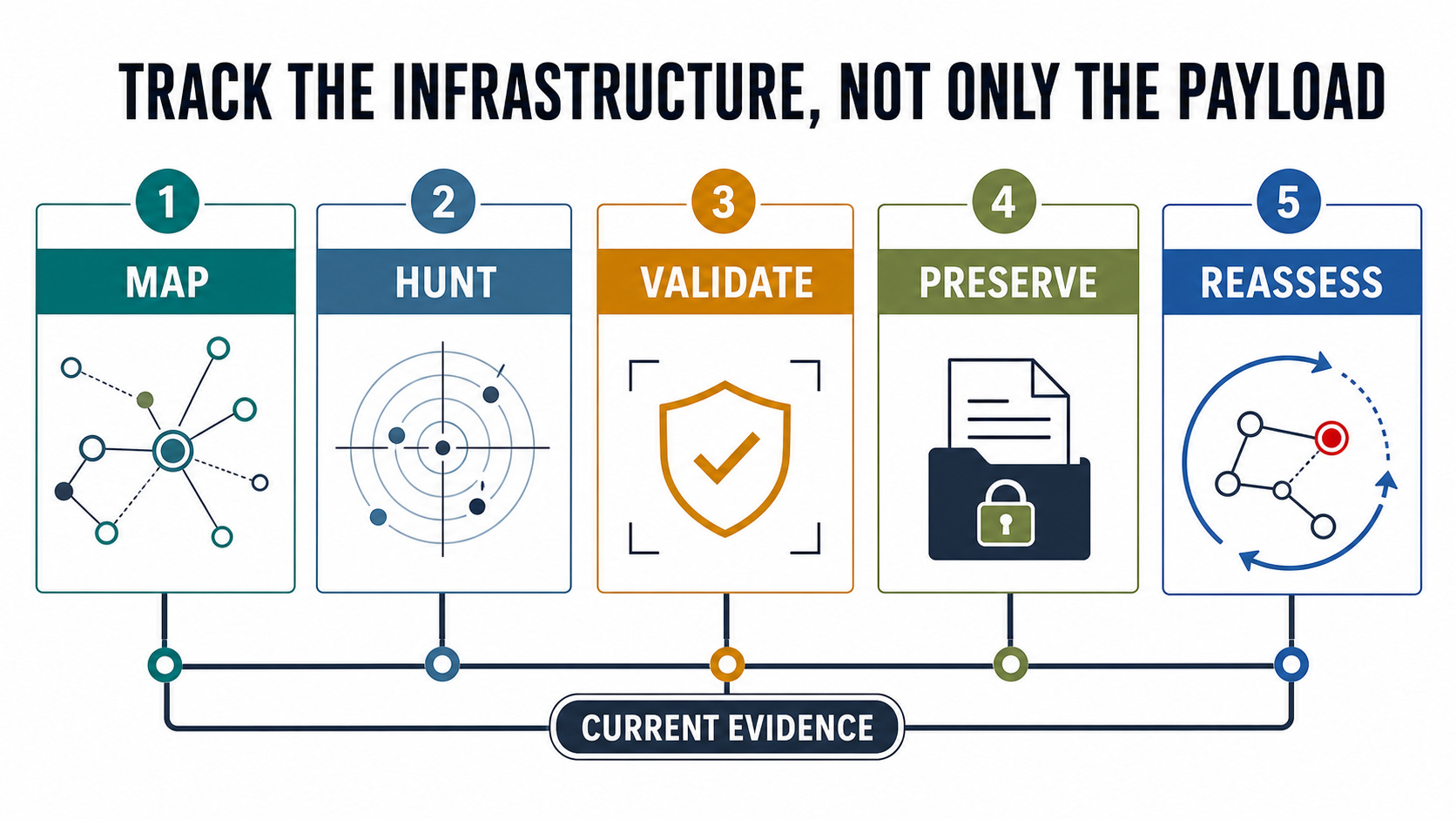
Map dependencies, hunt for corroborated relationships, validate before blocking, preserve evidence, and reassess as the infrastructure changes.
The Pressure Point Sits Below the Payload
The newly public indictment does not prove the charges, and it does not establish that the alleged service has been dismantled. It does show where authorities are placing part of their case: on the infrastructure that lets many kinds of cybercrime survive complaints, blocks, and takedown requests.
That is a useful shift in scope. Tracking only the ransomware name on the screen misses the services underneath it. Tracking those services—carefully, with corroboration—can connect campaigns, preserve evidence, and show where a dependency may be vulnerable to legal, financial, or technical pressure.
Payloads are replaceable. The systems that keep them reachable leave a longer trail.