


Socket's latest findings show a North Korea-linked campaign spreading hidden loaders across open source ecosystems, with Git history and developer tooling turned into trust gaps.
PolinRider is a useful warning because it does not depend on one strange package in one registry.
According to Socket Threat Research, the North Korea-linked campaign has expanded across npm, Packagist, Go modules, and Chrome extensions, with 162 malicious release artifacts across 108 unique packages and extensions. Socket links the activity to the broader Contagious Interview / Famous Chollima developer-targeting cluster.
That scale matters. But the sharper point is the tradecraft.
The campaign is built around a simple operational bet: if attackers can make a compromised repository look normal, the package ecosystem will keep carrying trust downstream.
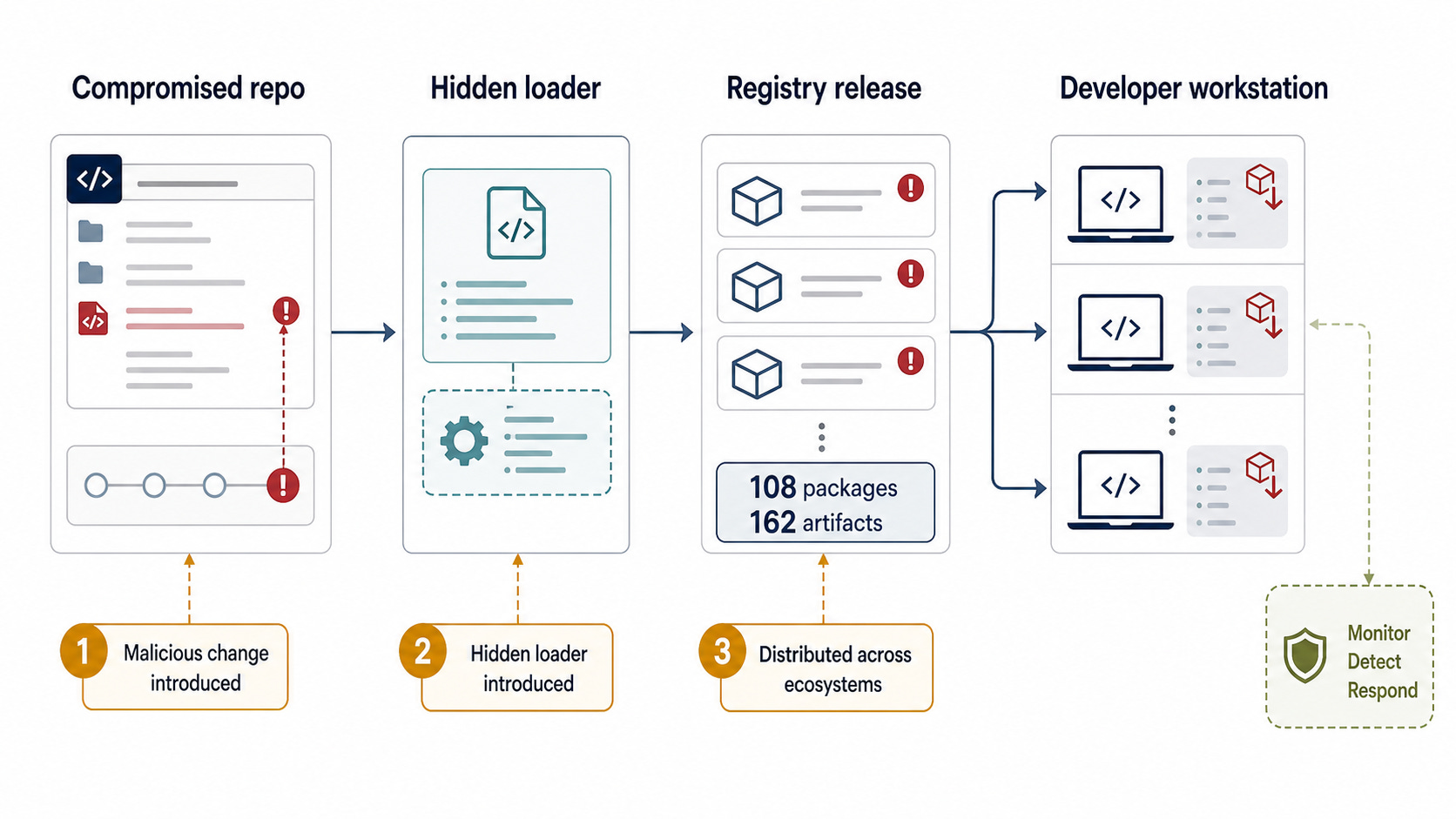
The Compromise Is Upstream Of The Install
Socket says PolinRider activity commonly starts with legitimate GitHub repositories. Threat actors modify repositories, hide obfuscated JavaScript loaders, and where they have registry access, publish infected package versions into downstream ecosystems.
That turns the usual package-risk question inside out.
Security teams are used to asking whether a dependency is new, abandoned, typo-squatted, or suspiciously named. PolinRider keeps the more uncomfortable case in frame: what if the dependency looks legitimate because it was legitimate before the account or repository was modified?
Socket points to synchronized modification activity across repositories tied to the Xpos587 GitHub account on June 23 at 10:00 UTC. The report frames that pattern as consistent with account-level compromise followed by bulk repository modification, rather than ordinary per-project maintenance.
From there, the risk can move into package releases. Socket reports malicious Go module releases tied to the Xpos587 case, while also noting that it did not observe corresponding malicious PyPI releases from that maintainer account.
That distinction is important. Repository compromise is not the same as universal registry compromise. Access boundaries still matter.
Rewritten History Breaks The Comfort Signal
The most operationally painful part of PolinRider is not only the loader. It is the way the campaign can manipulate the evidence defenders normally trust.
Socket describes Git history rewriting, including force pushes and anti-dated commits, that can make malicious changes appear older or less suspicious. In affected repositories, the normal file view may show routine-looking commit messages and dates, while the Activity tab exposes more recent force-push activity.
A clean-looking repository landing page is not a clean bill of health.
For defenders, that means the review path has to widen. Visible commit history, package metadata, and maintainer reputation are not enough when the campaign specifically tries to make recent malicious changes look stale.
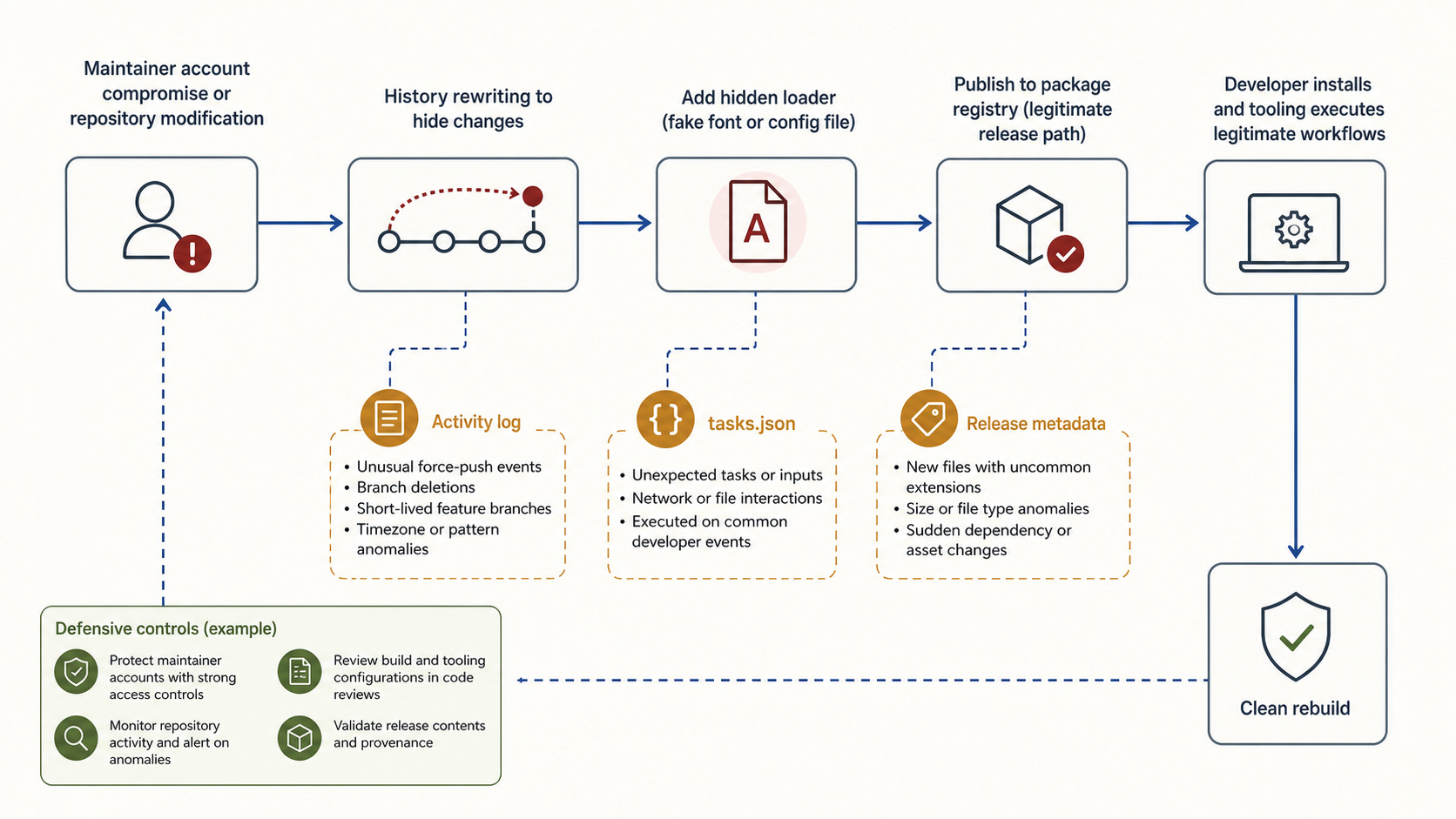
The practical inspection set is more specific: repository activity logs, release timestamps, registry publication history, unusual synchronized updates across projects, and changes to files that can create execution paths inside developer tooling.
The Loader Hides Where Developers Do Not Look First
Socket reports two primary hiding patterns across observed PolinRider variants.
Earlier activity hid obfuscated JavaScript in configuration files, including `*config.js` files. More recent variants hid loaders inside fake `.woff2` font files and triggered execution through VS Code task files.
The point is not that fonts are magically dangerous. The point is that developer environments are full of files that reviewers mentally classify as static, routine, or boring. A fake font file can sit in that blind spot. A task configuration can turn that blind spot into an execution path.
Socket says the `.vscode/tasks.json` pattern can define a hidden task that runs when a folder opens and invokes a fake `.woff2` file with Node.js. After deobfuscation, Socket describes the payload as a JavaScript malware loader that can retrieve encrypted second-stage material from blockchain and public RPC infrastructure, decrypt it with embedded XOR keys, and execute the result.
That is enough detail for a defender to know where to hunt. It is not a reason to publish a playbook for misuse.
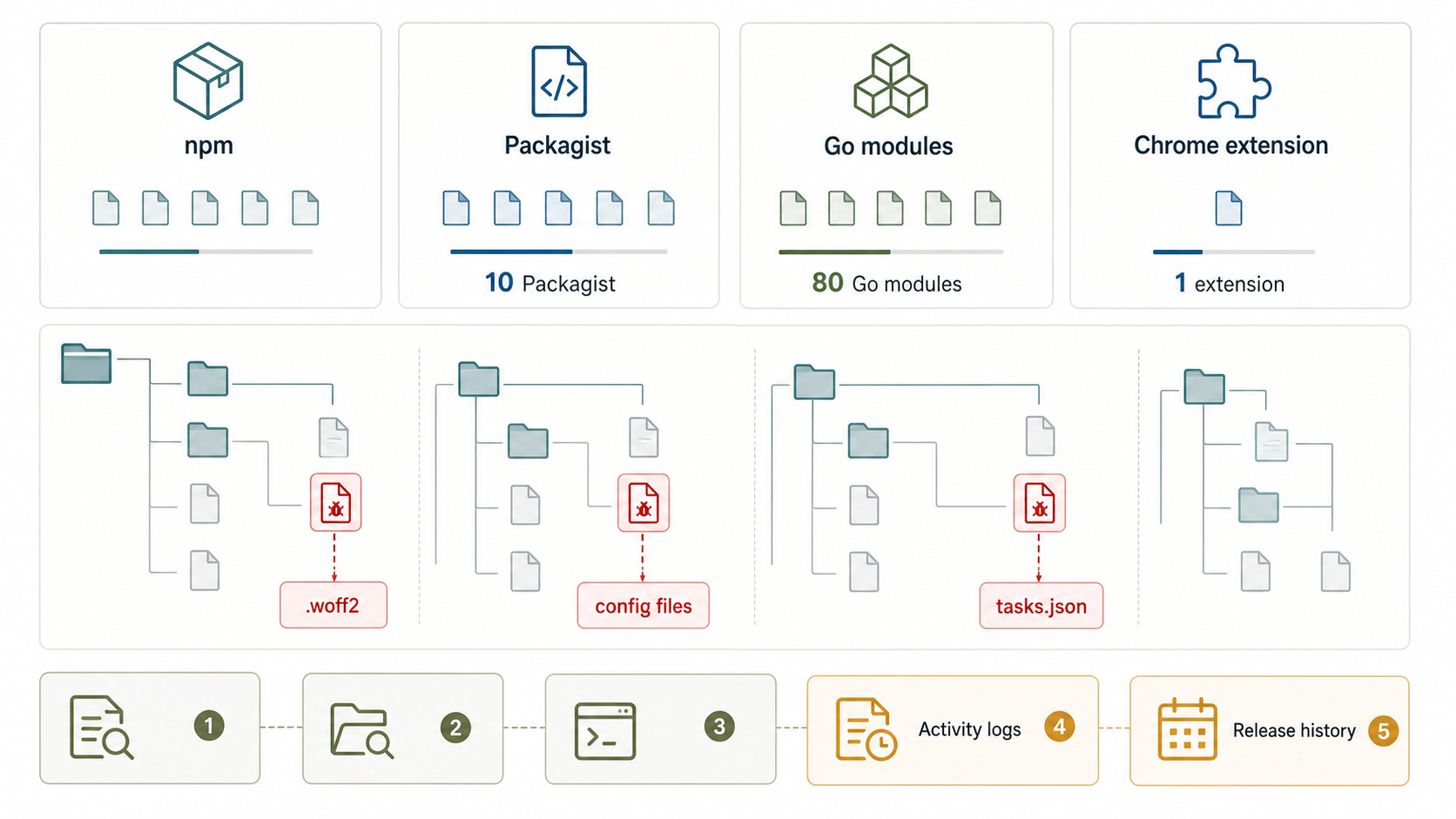
Socket says observed follow-on payloads include DEV#POPPER and OmniStealer. Because the design is loader-based, the safer assumption is not that the campaign is limited to a fixed payload set. The safer assumption is that the initial loader gives the operator room to change delivery.
Packagist Shows Why Cleanup Can Miss The Second Path
Socket also describes recent PolinRider activity in Packagist under the sevenspan namespace, maintained by the 7span organization.
In that case, maintainers identified part of the compromise and removed fake `.woff2` font files from affected repositories and packages. Socket says the cleanup did not remove all variants: obfuscated JavaScript hidden in configuration files remained present in some affected repositories.
That is the control lesson.
If response teams clean only the visible payload family, they may leave the alternate execution path intact. PolinRider uses more than one hiding method, and cleanup has to be based on repository and release behavior, not only one file extension.
Socket also notes it did not observe corresponding malicious npm releases from the same organization in that case, suggesting the actors may not have had npm publishing access. Again, the boundary matters: compromised repository access, package-manager publishing access, and downstream install impact are related but not identical.
Treat Developer Machines As The Blast Radius
PolinRider targets the place where source control, package management, local tools, cloud access, and CI/CD credentials overlap: the developer environment.
That makes response more serious than removing a dependency from a manifest.
Socket recommends treating environments that installed affected package or extension versions as potentially compromised until reviewed. The response sequence is deliberately operational: preserve forensic artifacts where possible, identify developer machines that installed affected versions, remove affected versions, rebuild from known-good lockfiles, rotate exposed secrets from a clean machine, and audit developer workstations and repositories for hidden execution paths.
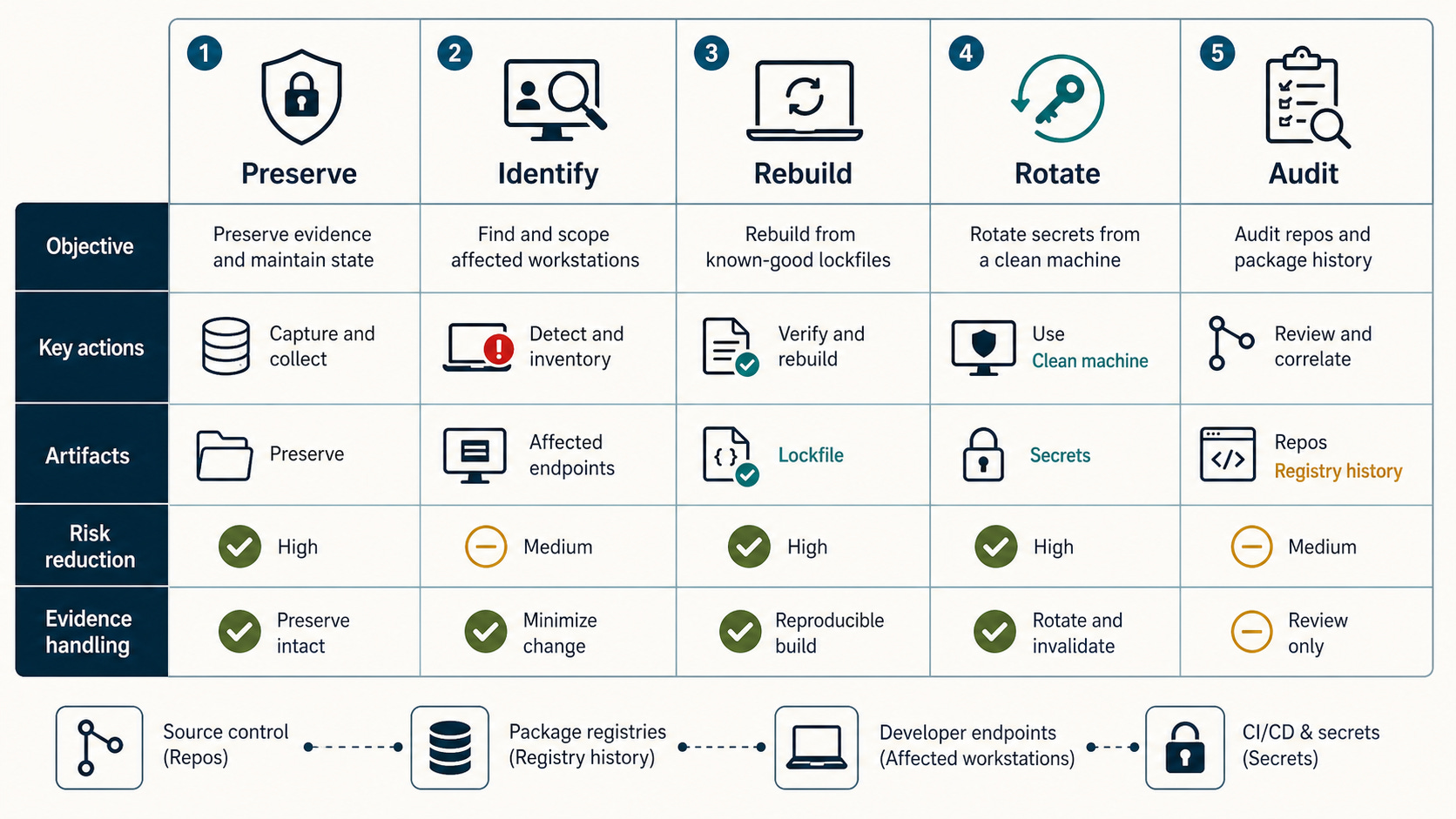
The secret-rotation point deserves emphasis. Rotating from the same potentially infected workstation can preserve the attacker's advantage. The clean host is not a formality. It is the boundary between remediation and re-exposure.
Security teams should also audit for VS Code tasks configured to run on folder open, commands that invoke unusual file extensions with Node.js, suspicious changes to `.vscode/tasks.json`, `config.js`, `vite.config.js`, `eslint.config.js`, and unexpected activity under font or static asset directories.
The Trust Model Needs More Telemetry
PolinRider is not only a malicious-package story. It is a trust-model story.
The visible repository may look normal. The commit date may look old. The package name may have a history. The maintainer account may be real. The release may still be malicious.
That does not make open source unusable. It means dependency security has to become more evidence-led.
Organizations need dependency review that can connect repository activity, registry release metadata, maintainer-account signals, local developer execution paths, and post-install endpoint telemetry. The most useful signal may not be "this package is bad" in isolation. It may be "this trusted package changed in a way that does not match its normal maintenance pattern, and developer tooling now has a new execution path."
PolinRider's lesson is blunt: the package registry is no longer just a software intake point. It is part of the developer compromise surface.