


CyberScoop reported that a self-propagating npm compromise reached more than 440 package names in under four hours on August 4. Researchers traced the first wave through the Keyv and Cacheable package families and then into packages controlled by other maintainers.
The speed was extraordinary. The trust failure was more important.
StepSecurity found that poisoned releases were published through npm's OIDC Trusted Publishing path with valid SLSA provenance attestations. The release machinery identified the repository, workflow, and source commit correctly. The source commit itself had already been poisoned.
The provenance was valid. The authorization behind the source was not.
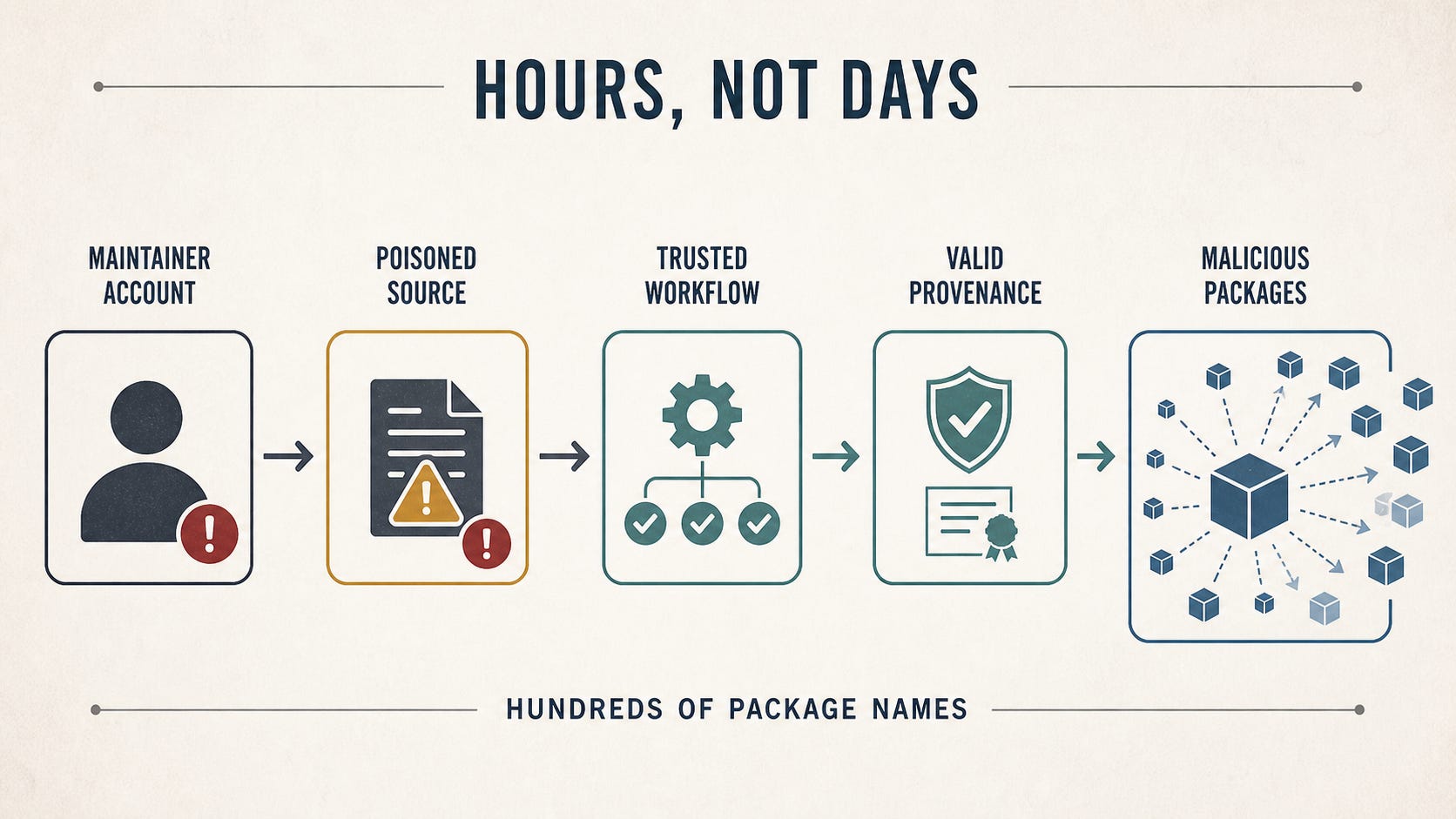
The release pipeline produced a verifiable record of a malicious source tree. Origin proof did not establish that the source change was legitimate.
The pipeline did exactly what it was told
Socket's investigation says the evidence indicates a maintainer account was compromised. Malicious changes were pushed into repositories used to publish widely deployed caching libraries.
The altered packages added a preinstall hook named setup.mjs. During installation, that hook obtained a standalone Bun runtime and launched an obfuscated second stage before the package install completed. Researchers found credential-harvesting logic aimed at developer and CI environments, plus code that could use stolen npm publishing access to release trojanized versions of additional packages.
That sequence turns one trusted maintainer identity into a propagation surface. The compromised package is not merely the payload; it is a machine for finding the authority to publish the next payload.
No developer had to import the library or call a vulnerable function. Pulling an affected release into an environment where lifecycle scripts could run was enough to execute the malicious installation path.
Valid provenance answered only one question
Provenance is valuable because it can bind an artifact to a declared source repository, workflow, and commit. It helps detect unsigned releases, mismatched build origins, and artifacts that did not come through the expected pipeline.
In this incident, that control did not fail cryptographically. According to StepSecurity, the attacker used the maintainer's own repositories, pushed poisoned release commits and tags, and allowed the legitimate workflows to publish the resulting packages. The attestations accurately described that process.
What they could not answer was whether the source change represented an authorized maintainer decision, passed meaningful review, or was benign.
Provenance can prove where a build came from without proving that anyone should trust what was built.
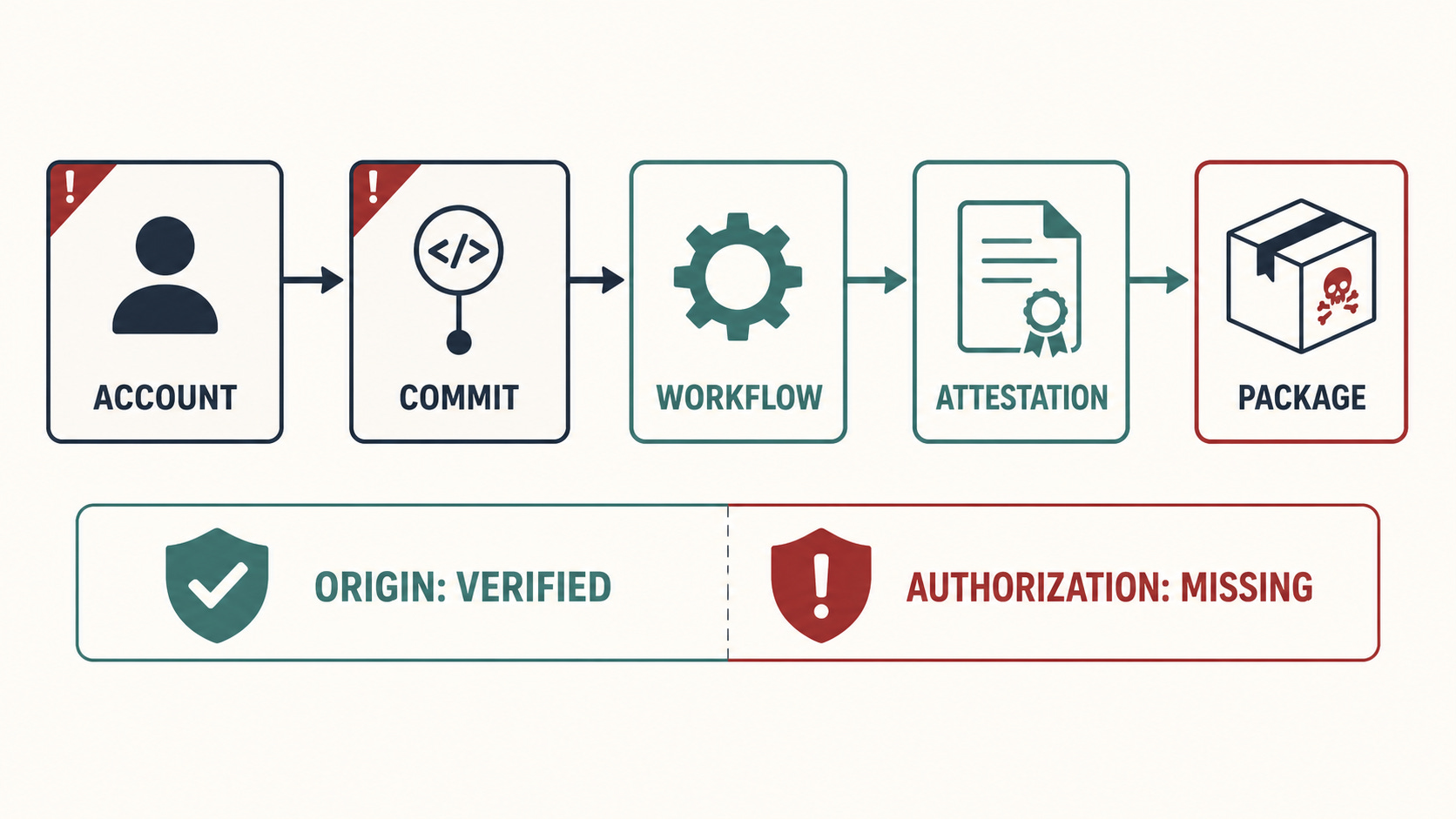
A valid attestation closes the origin question. It does not close the account, review, or authorization questions upstream of the build.
The count was moving faster than the headline
CyberScoop's fresh report used a figure of more than 440 package names in under four hours. StepSecurity's active-investigation snapshot, updated at 18:10 UTC on August 4, counted 444 package names and 2,212 poisoned versions. Other research teams published different totals as the campaign expanded and as they counted packages, versions, or artifacts differently.
That variation is not a reason to dismiss the event. It is a reason to label the denominator.
A poisoned package version is not the same as an executed install. A package name is not a victim organization. Download volume is not confirmed compromise. The defensible statement is that researchers independently observed malicious artifacts spreading across hundreds of npm packages within hours; the number of affected systems remains unknown.
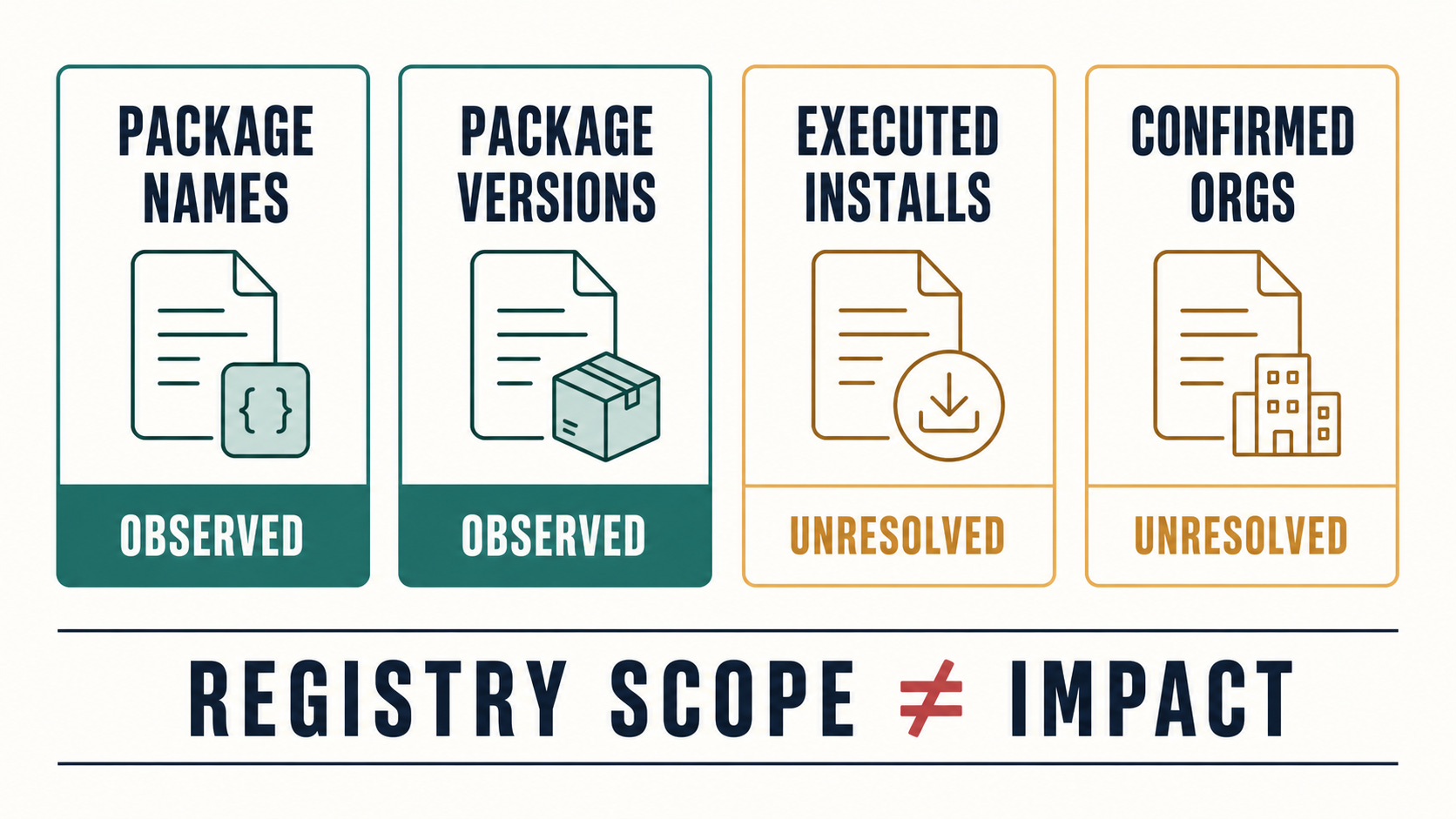
Fast-moving artifact counts describe registry scope. They do not, by themselves, measure execution or organizational impact.
Similar tradecraft is not an identity
The CyberScoop story described the malware as a Mini Shai-Hulud variant linked to TeamPCP. The primary technical evidence supports a narrower statement.
Socket found tradecraft that closely resembles earlier Shai-Hulud activity: credential harvesting, enumeration of packages a maintainer can publish, republishing through stolen tokens or trusted publishing, and staging stolen data through attacker-controlled GitHub repositories. But the researchers did not recover the self-identifying markers that would tie the sample firmly to a named campaign. They also documented techniques not present in earlier reporting.
The evidence supports a Shai-Hulud-like lineage. It does not yet prove who operated this campaign.
That distinction matters during response. Family resemblance can guide hunting; it should not turn into actor certainty, a victim claim, or a conclusion about initial access without corroborating evidence.
Rotation had a prerequisite
The payload created an unusual response hazard. Both StepSecurity and SafeDep warn that it can install a local token monitor designed to react when a stolen GitHub token is revoked. Rotating first could trigger an attacker-supplied handler left on the compromised machine.
For an isolated affected developer workstation or CI runner where that monitor is suspected, the evidence-led order is:
Isolate and preserve. Stop further package execution and publishing while retaining lockfiles, resolved versions, CI logs, release history, and host evidence.
Establish execution. Determine whether an affected version was only resolved or whether its installation hook actually ran.
Remove the monitor and persistence. Use the researchers' current indicator guidance to find and neutralize the local trigger before revoking credentials.
Rotate the reachable trust. Replace GitHub, npm, cloud, CI, secret-store, and service credentials that the environment could access; review repository and package-publishing activity for unauthorized changes.
Rebuild and verify. Recover the workstation or runner from a known-good state, regenerate lockfiles against clean versions, and verify the release path before restoring publishing authority.
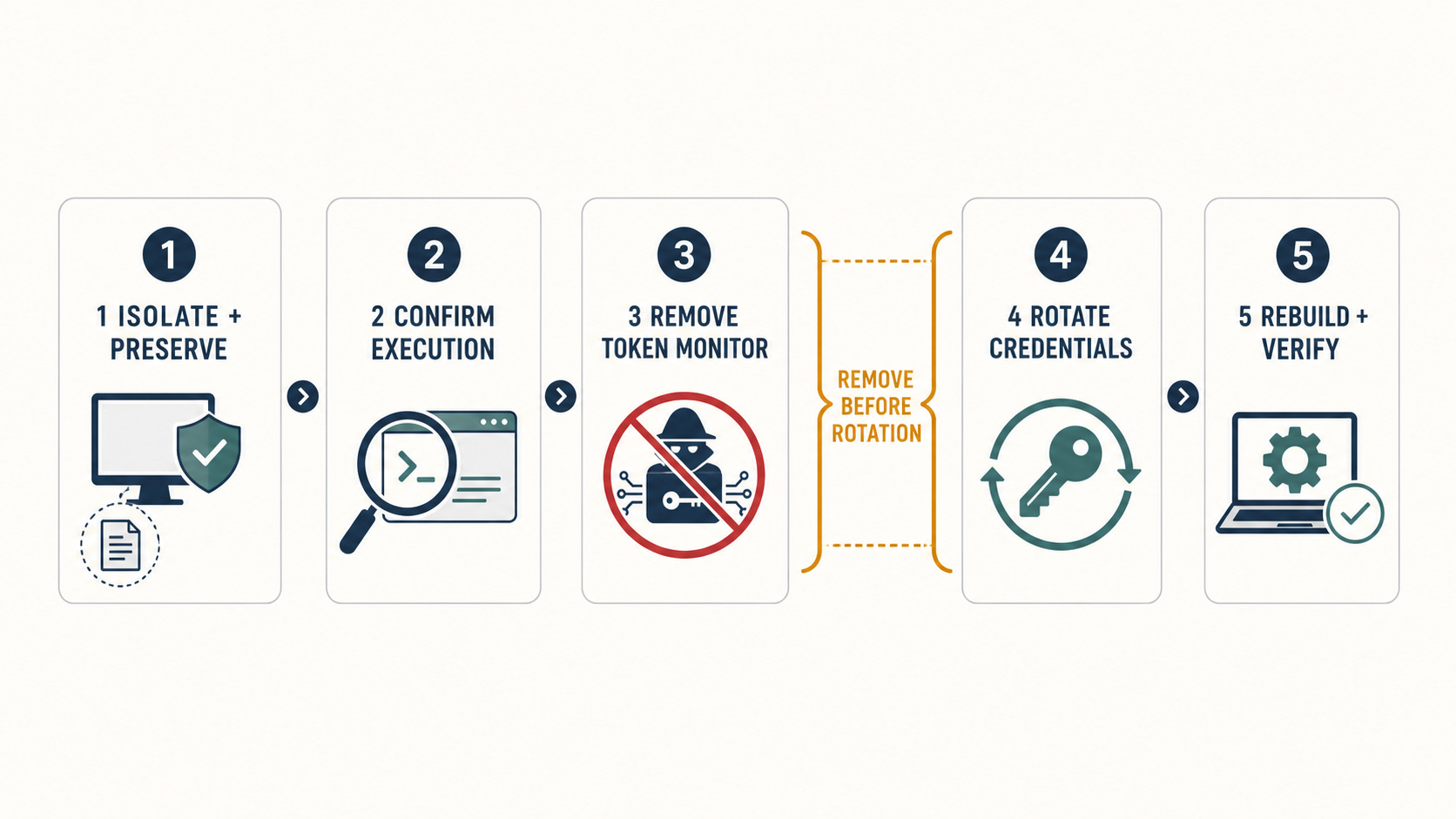
Do not delay containment. On an isolated affected host where the monitor is suspected, remove or safely exclude the local trigger before rotating reachable credentials. If that cannot be done safely, rebuild or replace the host from known-good under incident-response control. Preserve enough evidence to prove which versions executed and which publishing paths were touched.
Release trust needs an authorization record
This incident does not make provenance useless. It makes its boundary visible.
Teams still need artifact origin and integrity. They also need upstream evidence that the release was authorized: protected maintainer identities, reviewed changes to package manifests and lifecycle scripts, guarded release workflows, controlled tags, environment approvals, and alerts for unexpected publishing bursts.
Exact version locks and integrity hashes can slow an unreviewed update from entering production. They cannot clean a developer machine or runner that already executed the payload. A valid attestation can make a release traceable. It cannot make a poisoned commit safe.
Trust the attestation for the question it answers. Build separate controls for the human and workflow authority it cannot see.