


An SD-WAN orchestrator is not just another web server. It is a control point where administrators, device inventory, configuration, certificates, credentials, and managed edges converge.
That is the position now under active attack.
SecurityWeek reported that Arista patched CVE-2026-16812, a maximum-severity OS command injection vulnerability in on-premises VeloCloud Orchestrator. The vendor advisory says the issue was found externally and is known to be actively exploited.
An attacker needs network access to the VCO web interface, but not VCO tenant or operator credentials. Successful exploitation can affect the confidentiality, integrity, and availability of the orchestrator and the data it manages.
The urgent question is not only whether the host has been patched. It is whether the management plane can still be trusted.
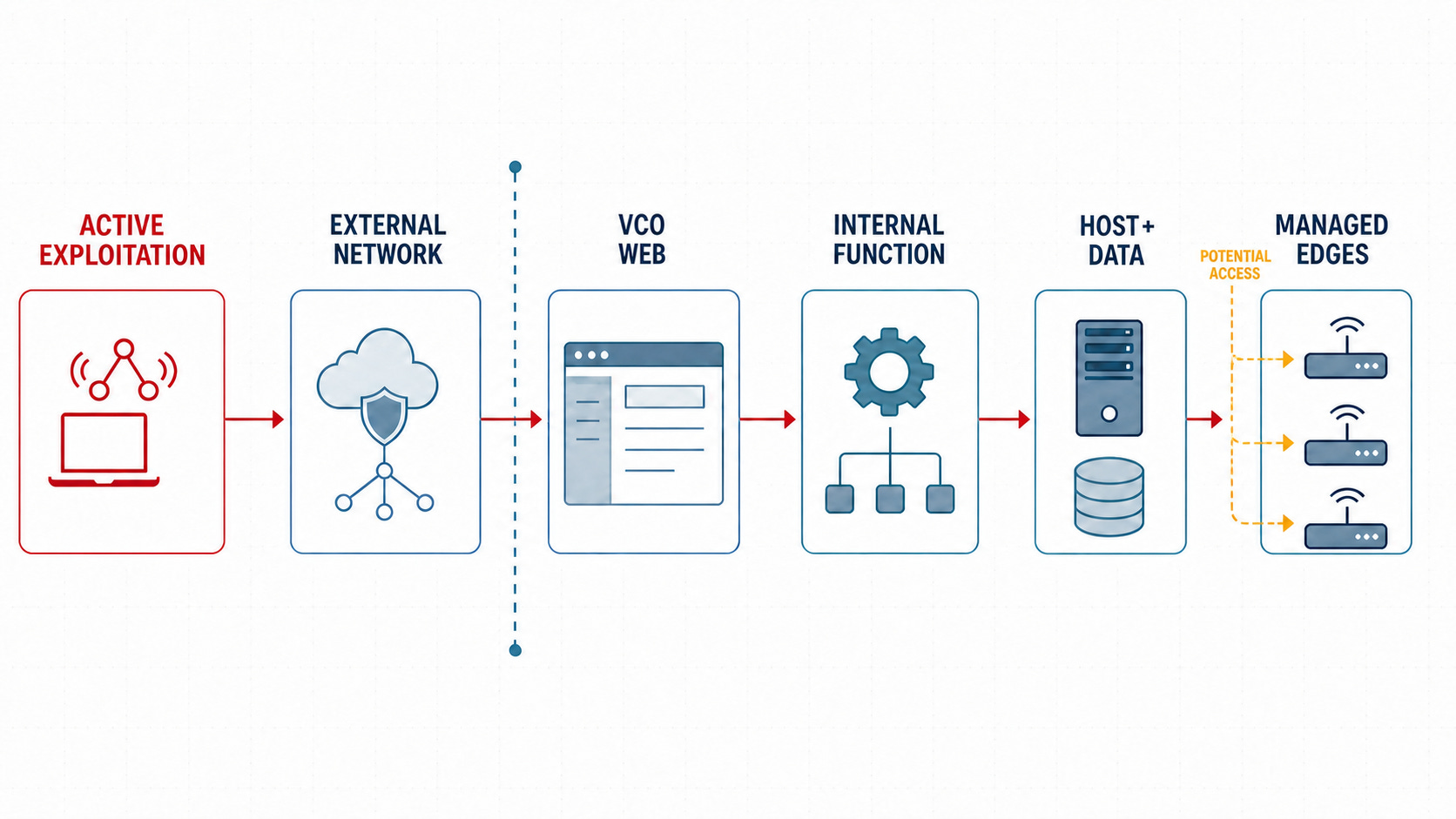
Confirmed exploitation reaches the orchestrator trust boundary; access to managed edges remains a possibility to validate, not an observed outcome.
An internal function became remotely reachable
Arista classifies CVE-2026-16812 as CWE-78 OS command injection and assigns it CVSS 10.0 under both version 3.1 and version 4.0. The affected surface is VeloCloud Orchestrator On-Prem.
The advisory says VCO is exposed by default and that there is no VCO configuration that prevents that exposure. That does not mean every instance is reachable from the public internet: network controls can still limit who can reach the interface. It does mean the product's own tenant and operator authentication is not the boundary for this flaw.
Affected releases are:
5.2.x before 5.2.3.14
6.1.x before 6.1.3.4
6.4.x before 6.4.2.4
7.0.x before 7.0.0.1
Hosted and Dedicated VCO deployments were patched before the notice. VeloCloud Gateway and Edge are listed as not directly vulnerable. End-of-support trains were not assessed.
The affected-version table places 7.0.0.1 outside the vulnerable range, although Arista's separate resolution list names fixed releases only for the 5.2, 6.1, and 6.4 trains. Teams on 7.0 should confirm the supported target with Arista rather than infer an upgrade path from the table alone.
The evidence starts before the upgrade
A version check tells a security team whether an orchestrator was exposed to the flaw. It does not establish whether exploitation occurred before the fix.
Arista published three source addresses observed conducting attacks, but also says there is no single definitive indicator of compromise. Blocking those addresses is useful containment. Treating their absence as a clean bill of health is not.
The stronger hunt correlates the VCO web layer with what happened next:
unusual path-like components, encoded characters, references to internal services, or high request rates in web logs;
unexpected outbound HTTP or HTTPS from the VCO host;
configuration changes or privileged maintenance without an administrator workflow;
command execution, file creation, database exports, or archive artifacts;
access to device inventory, configuration, credentials, certificates, or key material.
A patch closes the vulnerability. It does not erase the pre-patch evidence.
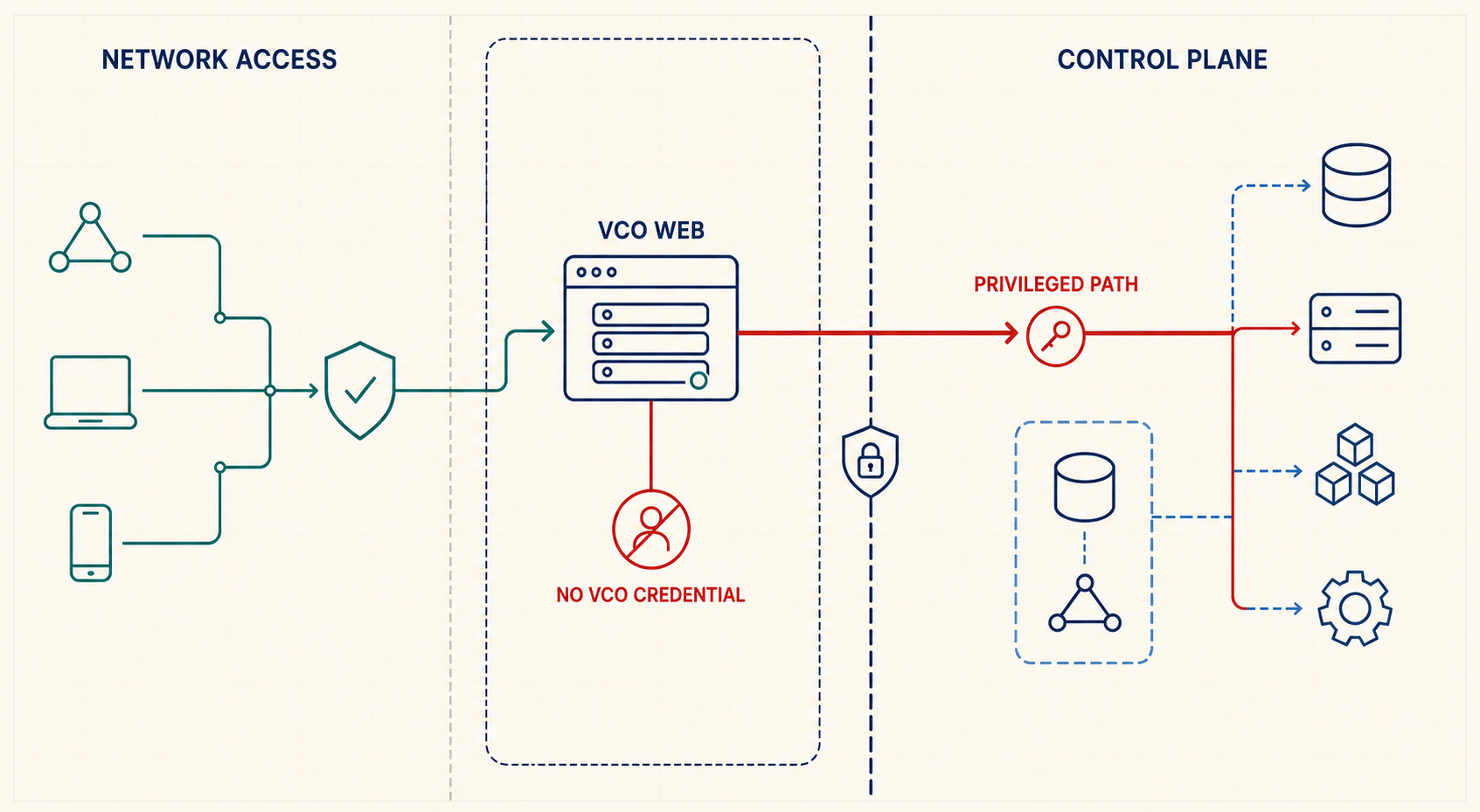
The exposed route crosses from a web request into privileged host and management-plane state without a VCO credential gate.
Preserve the clocks that can still agree
The web request, backend action, operating-system event, database access, and configuration change may each live in a different log. Their timestamps are the thread that can connect an inbound request to a privileged consequence.
Arista advises preserving VCO web access logs, backend application logs, system logs, database logs, and relevant file-system timestamps before remediation where operationally feasible.
That order matters. Rebuilding too early can destroy the only record that distinguishes scanning from successful command execution. Rotating credentials without retaining the database and system timeline can remove an active secret while leaving the route of access unexplained.
Containment and evidence preservation have to move together. Restrict the web interface to trusted administrative networks, capture volatile and durable evidence, then upgrade through the supported path.
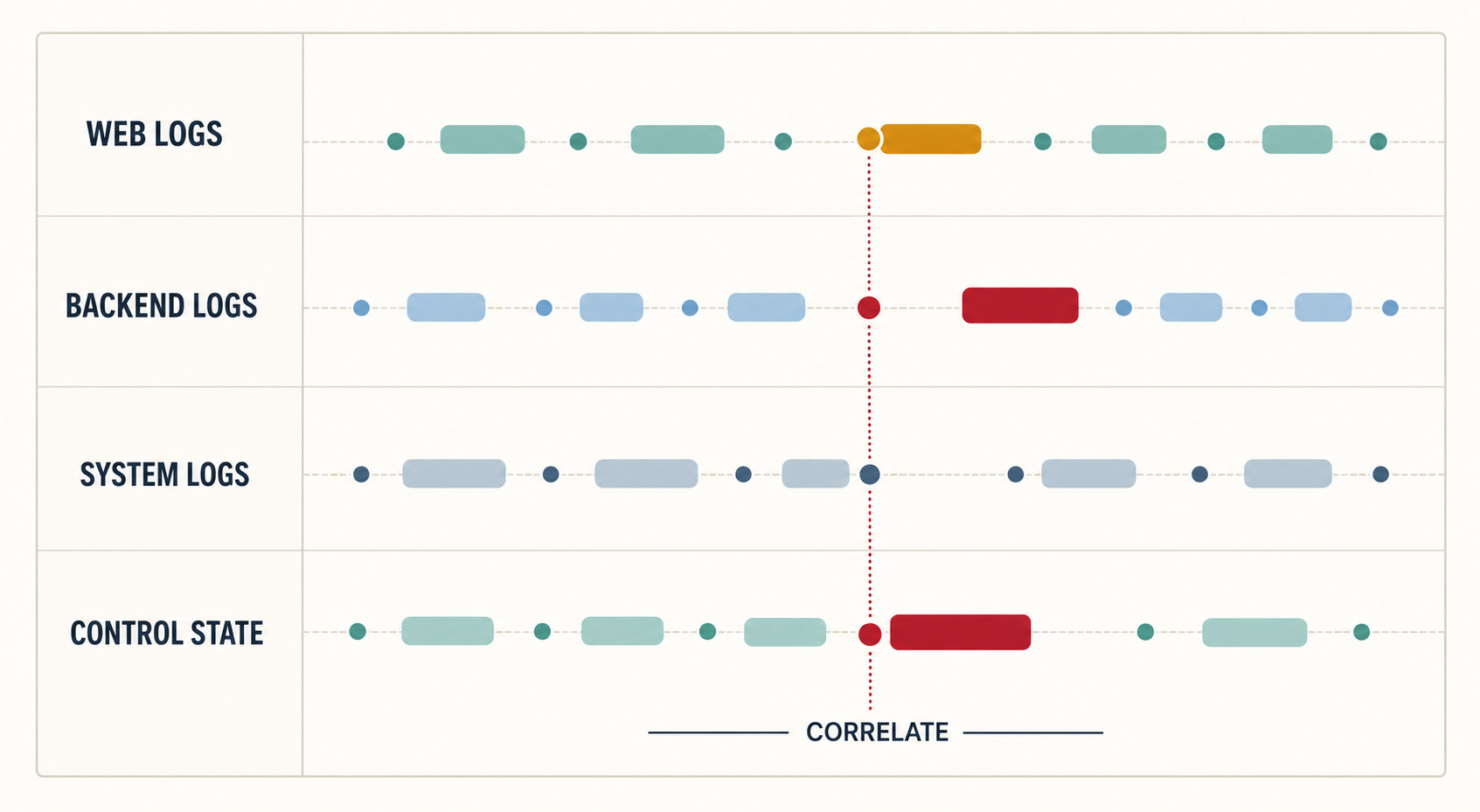
Four evidence stores can turn an isolated alert into a defensible account of what the management plane accepted and changed.
The blast radius is administrative
The advisory does not claim that every exploited orchestrator led to compromised edge devices. It does warn that compromise of the VCO platform may allow attackers access to managed VeloCloud Edge devices.
That distinction is important. A management-plane incident creates two scopes. The first is the orchestrator host and its local data. The second is every managed object, credential, certificate, policy, or device state the orchestrator could legitimately reach.
The second scope should be validated, not assumed. Review recent administrator actions, configuration deployment history, device inventory changes, certificate and key access, and the state of managed edges. Compare them with approved change records and known-good baselines.
Patch, then rebuild trust
The NVD record carries Arista's 10.0 scores and notes that NIST has not yet supplied an independent severity assessment. More important than the number, CISA added the flaw to its Known Exploited Vulnerabilities catalog on July 27 and set a July 30 federal remediation deadline.
For any exposed on-prem deployment, the response sequence is compact:
Contain: restrict VCO web access to trusted administrative networks and review the observed source infrastructure.
Preserve: retain web, backend, system, database, and file-system evidence before destructive remediation.
Patch: move to the fixed release for the supported train, with the 7.0 target confirmed where needed.
Revalidate: rotate credentials, review administrator activity, validate managed-device state, and restore or replace a suspect orchestrator from trusted sources.
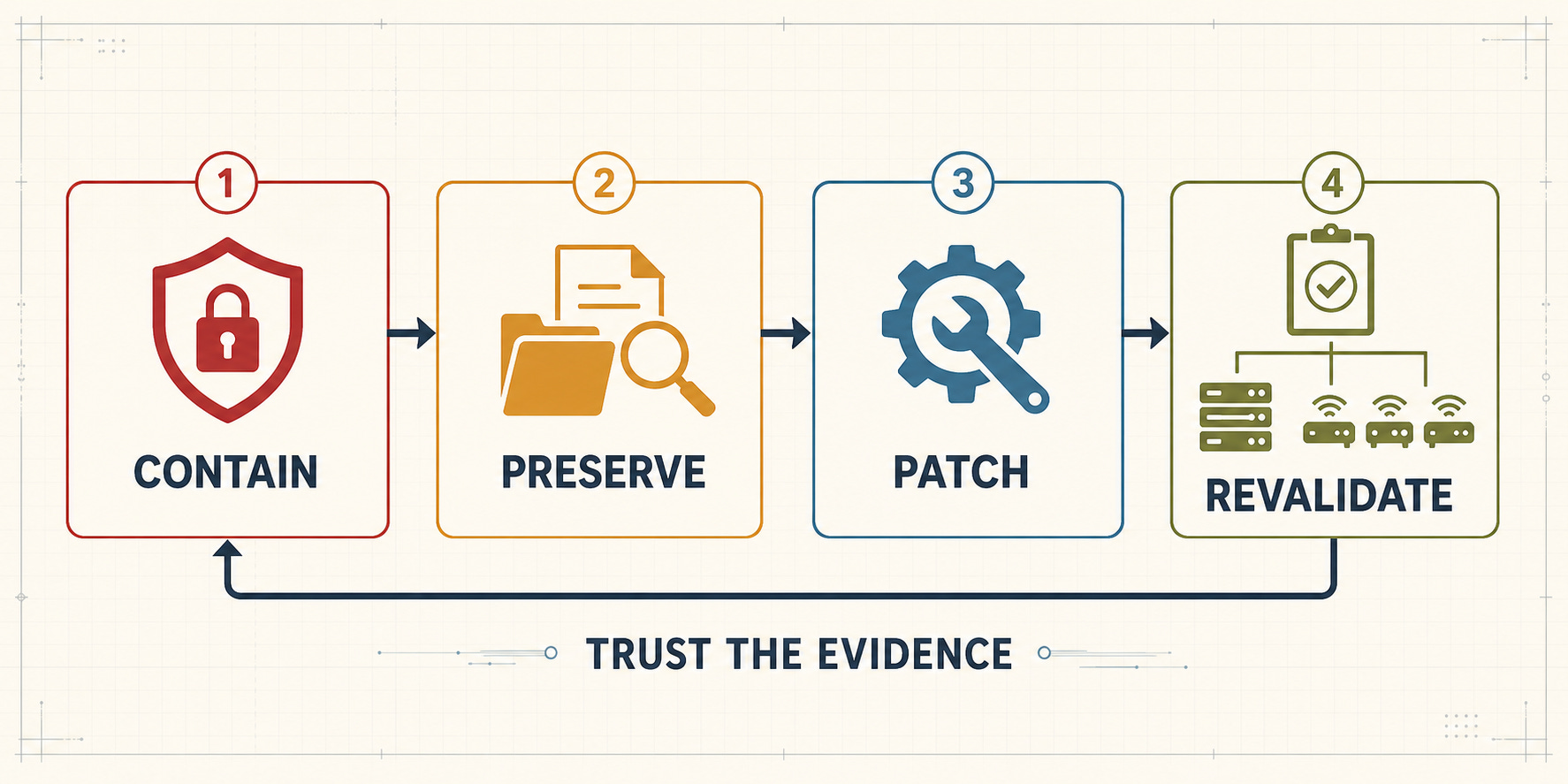
Recovery is complete only when both the orchestrator and the state it was allowed to manage have been validated.
Centralized control makes networks easier to operate because one plane can change many things. The same concentration makes an exposed management interface more than a server-level vulnerability.
Restore the control plane from evidence, not assumption.