


Ernst & Young has disclosed a breach involving a third-party information technology service-management platform used to support teams performing tax-related work. Support tickets in that platform may have included documents containing client tax information.
According to EY's notice, an unauthorized third party accessed the platform between March 28 and April 12 and downloaded documents pertaining to a number of clients. EY detected anomalous activity on April 23.
A support platform can look like workflow software while quietly accumulating data with repository-grade consequences.
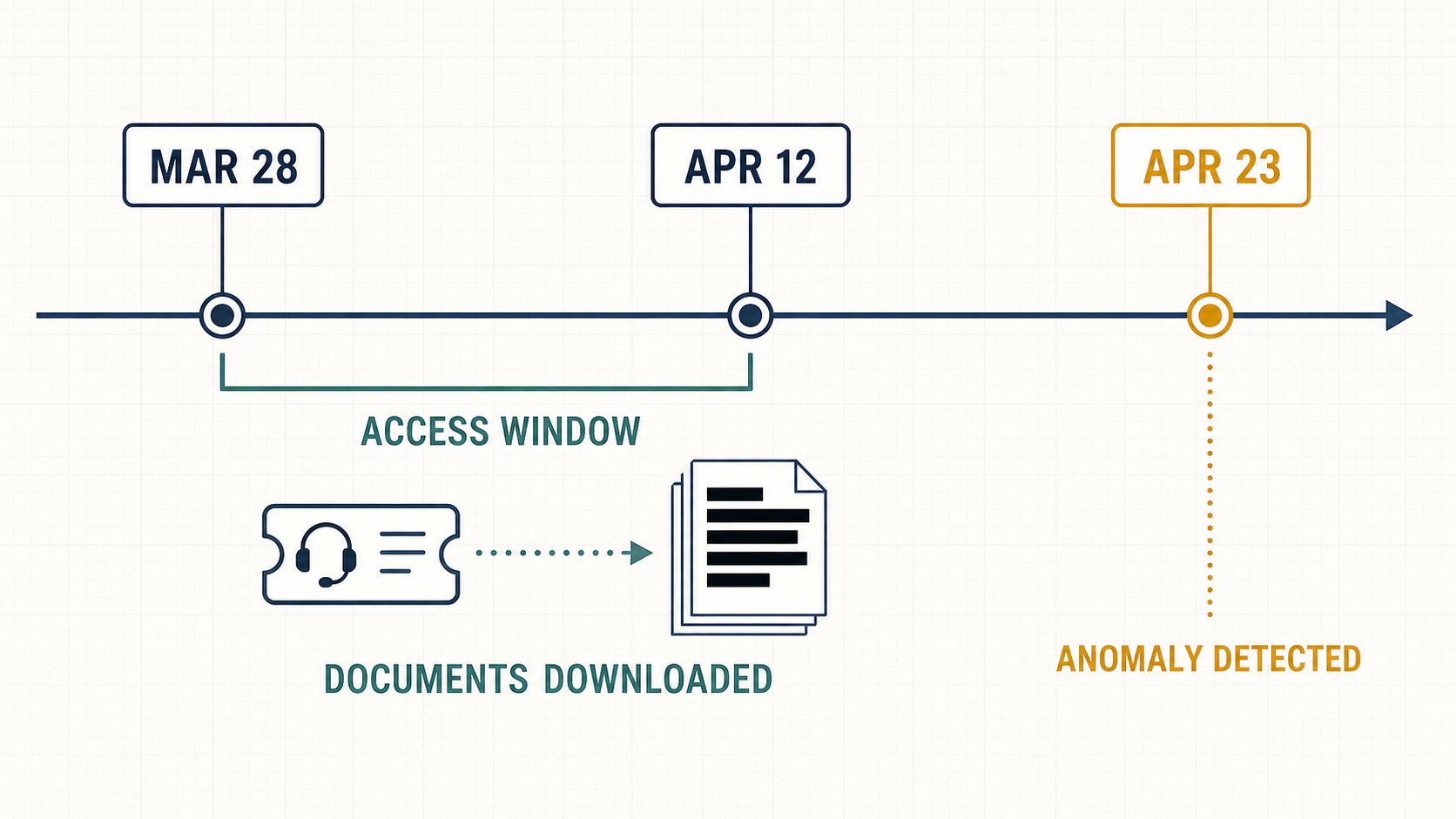
The public record establishes an access window, downloaded documents, and a later detection date. It does not establish the initial-access method, continuous dwell, or the full number of people affected.
The Ticket Was Carrying the File
The platform was not merely routing questions between users and technicians. EY says its IT personnel used it to support teams doing tax work, and that submitted tickets could include client tax documents.
That distinction changes the investigative unit. A support case can combine metadata, comments, internal notes, assignment history, status changes, and one or more attachment objects. An incident may affect only some of those layers.
The notice does not say how the attacker first entered the platform, which vendor operated it, or whether a particular control failed. It does confirm the outcome: documents were downloaded during unauthorized access.
For a ticketing incident, “which cases were touched” is not the same question as “which files were retrieved.” The answer has to resolve the case, attachment, actor, action, and time.
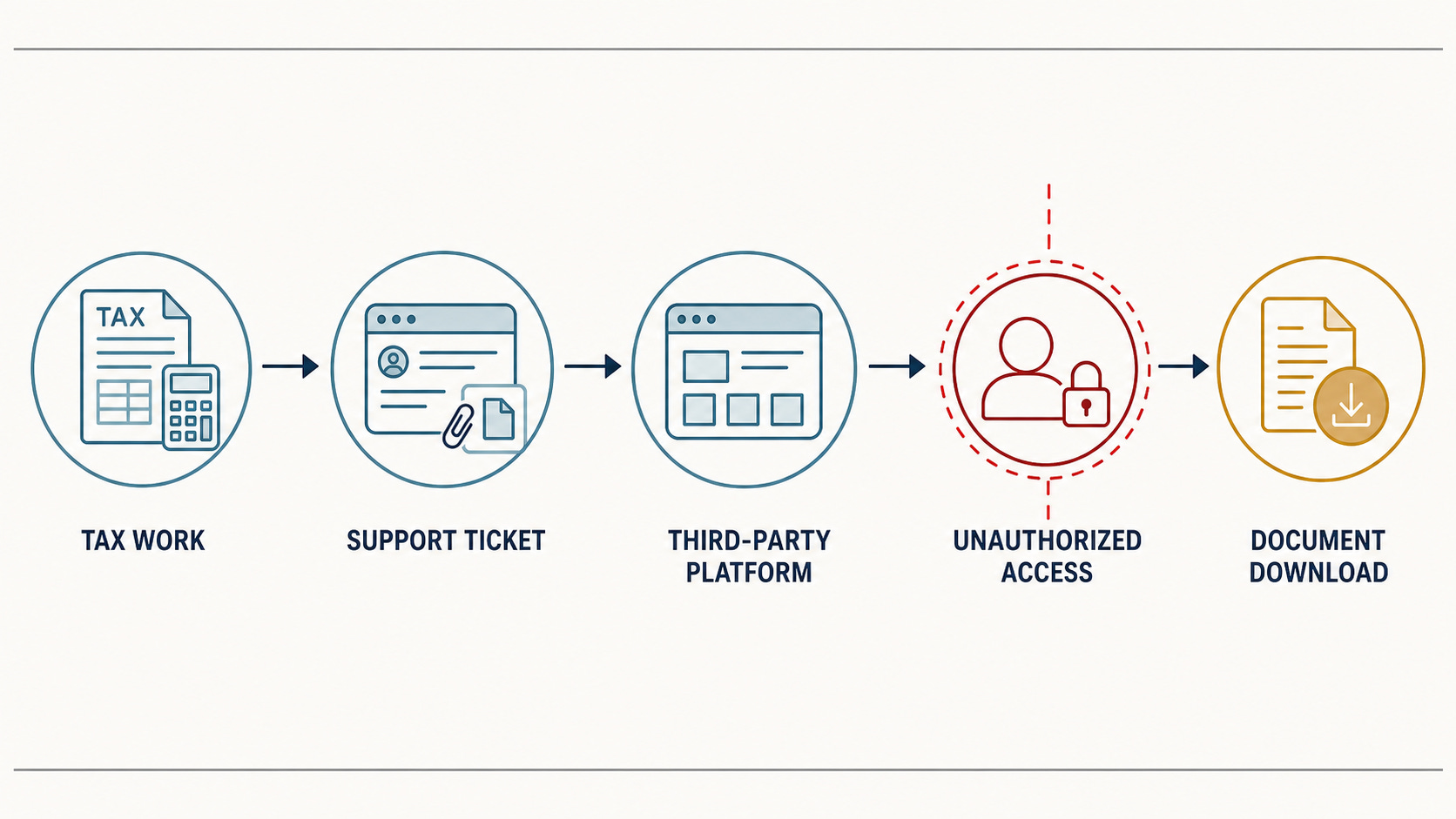
The disclosed path runs from tax-related support work to tickets with possible document attachments, then to unauthorized platform access and downloads. No initial-access technique has been disclosed.
Three Dates Define the Known Timeline
The California Attorney General's filing lists March 28 and April 23 as breach dates. EY's notice provides the more precise sequence: the identified unauthorized-access window ran from March 28 through April 12, and anomalous activity was detected on April 23.
That places detection 11 days after the last access date identified in the investigation. It does not prove the intruder was continuously active for the full period, nor does it show that the attacker retained access after April 12. The public evidence supports a window, not a minute-by-minute dwell calculation.
EY says its information-security team initiated incident response after the April 23 detection, worked with an independent cybersecurity firm, stopped the unauthorized access, secured the affected systems, and notified federal law enforcement.
The timeline still leaves operational questions that matter during third-party incidents: when the relevant logs were first reviewed, which events identified the download activity, what retention existed before discovery, and how quickly the affected-client set could be reconstructed. None of those details has been made public.
The Scope Is Specific—and Still Incomplete
The disclosed documents contained certain personal and financial data held in, or used to prepare, tax filings. BleepingComputer notes that the sample notice uses placeholders for the precise data elements, so the information exposed may differ by recipient.
EY has not publicly stated the total number of affected people or clients. It has not identified the third-party provider, disclosed the initial-access vector, or said whether the impact extends beyond the United States. No ransomware or extortion group had claimed the incident when the reporting was published.
EY also says it is not aware of misuse or further exposure of the affected personal information and has no indication that particular individuals were specifically targeted. That is a useful boundary on what is known, but it is not the same as proving that downloaded data cannot be used later.
Confirmed download and confirmed misuse are different findings. Incident reporting should preserve that distinction without minimizing either one.
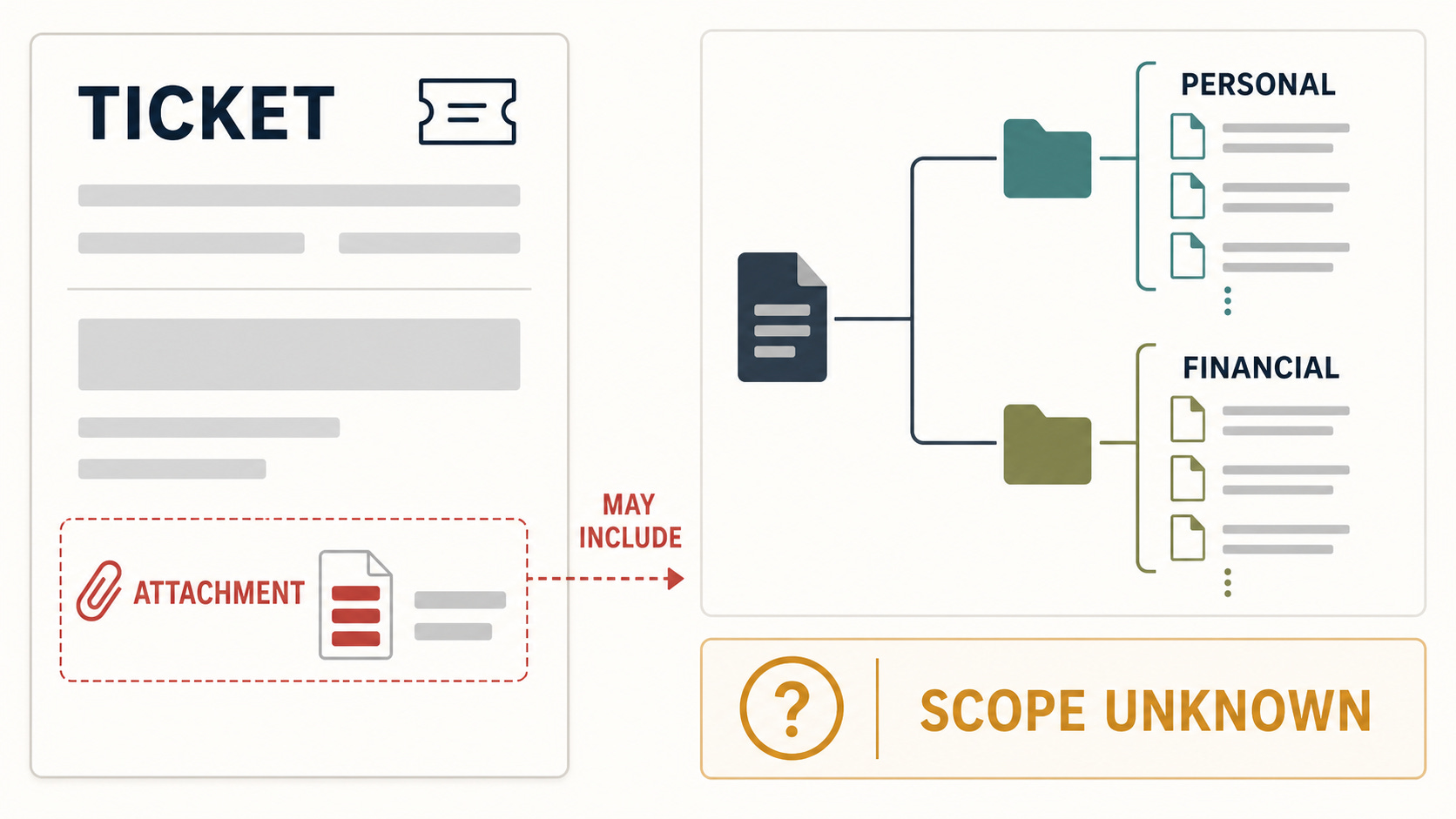
Public sources identify tax-work documents plus personal and financial data. The exact fields, affected population, provider, and access method remain undisclosed.
A Ticket Is More Than One Record
EY's notice says documents were downloaded. It does not say whether they were retrieved one by one, through search results, with an administrative export, through an API, or by another mechanism.
Those paths can leave very different evidence. A case-history log may show that a ticket was opened without recording that an attachment was viewed. An attachment event may identify a file but not the support role, session, or API credential behind the action. A tenant-wide export may sit outside the normal case timeline.
A platform can preserve workflow history while losing breach history.
The object model matters because notification scope is built from it. Investigators need to connect each case to its attachments, each attachment to access events, and each event to an actor, session, action, and timestamp. Without those joins, “documents pertaining to a number of clients” becomes a manual reconstruction problem.
Closed cases matter too. If completion removes a ticket from the active queue but leaves an attachment retrievable, the evidence trail needs to preserve that state. If deletion removes the file, investigators still need a tombstone showing what object existed, who could reach it, and when it disappeared.
Build the Case-Level Evidence Trail
Ticket-platform detection should be designed around the actions that change exposure, not only the actions that move work.
Give attachments durable identity. Preserve a stable object ID, integrity hash, parent-case relationship, sensitivity label, and lifecycle state without retaining the sensitive content in the audit log itself.
Separate views from retrieval. Record preview, download, API fetch, bulk export, and administrative access as distinct events.
Bind every event to context. Capture the actor, support role, session or API identity, privilege state, timestamp, and source context needed to distinguish expected case work from broad collection.
Watch the paths outside the case page. Search, reporting, integration, backup, and tenant-administration functions can expose multiple objects without producing an ordinary ticket interaction.
Preserve permission history. Group membership, inherited queues, temporary elevation, reassignment, and role changes determine who could reach an attachment at a particular moment.
Test the incident export. A response team should be able to retrieve raw attachment-access events, administrative changes, and case-object relationships with consistent timestamps and integrity metadata.
Rehearse the scoping query. Start with a suspect actor or session, enumerate every case and attachment reached, map those objects to clients and recipients, and identify any gap that requires provider-side evidence.
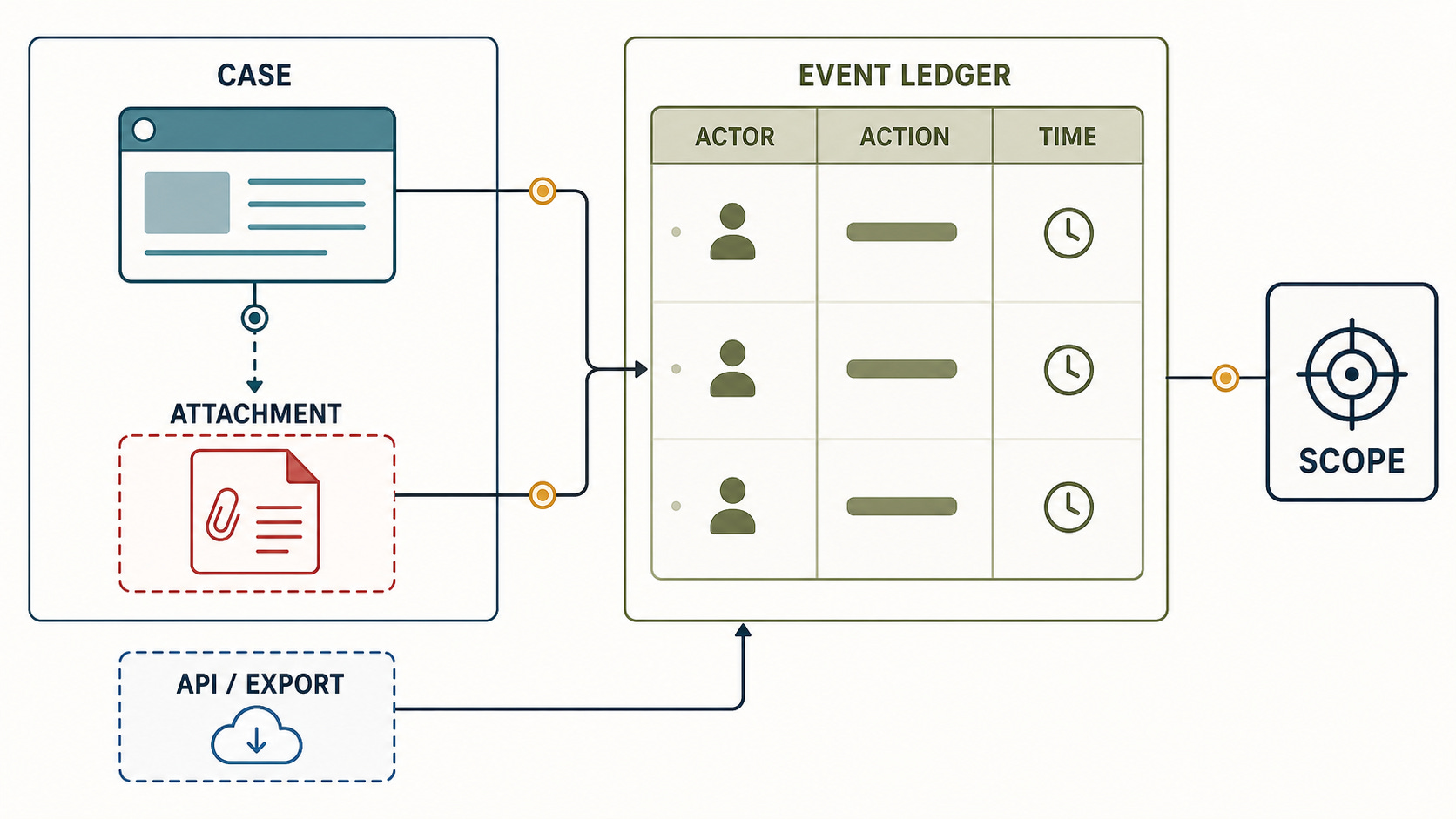
A defensible scope connects the case object to the attachment, actor, action, and time. Workflow logs alone may not preserve that chain.
Data minimization still helps: controlled links can keep sensitive source documents out of the queue, and attachment expiry can reduce the available corpus. But once a platform accepts the file, case-level auditability becomes part of the protection model.
No intrusion technique—novel or otherwise—has been disclosed. The operating fact is narrower and more useful: a support platform held tax-work documents, an unauthorized party reached it, and files were downloaded.
When the support platform becomes the incident scene, the decisive question is whether every retrieved object can be tied back to a case and forward to an accountable event.
Sources
California Department of Justice — submitted EY breach-notification sample
EY — sample U.S. notice letter filed with the California Attorney General
BleepingComputer — Ernst & Young discloses data breach after support system hack
Security Affairs — EY investigates breach involving third-party support tickets